

Last Updated on August 13, 2026 by Eric
September fishing in Port Canaveral is the handoff between late summer and early fall. Warm water, active bait, nearshore reefs, offshore edges, and the first signs of fall migration all overlap this month, giving anglers several ways to build a productive trip. Some days point toward king mackerel and sharks close to the beach. Other days open the door for offshore trolling, reef fishing, wreck fishing, or a mixed plan that follows the best bite instead of forcing one target.
For anglers comparing Port Canaveral fishing charters, September is a flexible month. A calm forecast may make a longer offshore fishing charter the right call, while a shorter weather window may favor a nearshore fishing charter or a heavy-tackle shark fishing charter. The best trip is the one matched to the bait, current, sea state, group, and legal harvest opportunities that day.
Compared with August fishing in Port Canaveral, September starts to feel more transitional. Summer heat and afternoon storms are still part of the plan, but bait movement begins to matter even more. Mullet, menhaden, threadfins, sardines, blue runners, and other forage can pull predators into predictable lanes around beaches, reefs, shoals, tide lines, and offshore structure.
How September Conditions Shape Port Canaveral Fishing
September is not one clean, tidy fishing pattern. That would be too convenient, and the ocean has never been accused of being an office spreadsheet. It is a layered month: late-summer offshore fishing, early fall kingfish movement, nearshore bait activity, shark opportunities, and reef or wreck bottom fishing can all be part of the picture.
| September Variable | Effect on Fishing | Best Adjustment |
|---|---|---|
| Bait movement | Predators gather around mullet, menhaden, threadfins, sardines, blue runners, and other bait schools. | Watch for birds, bait showers, slicks, surface strikes, nervous water, and marks on the machine before committing to an area. |
| Kingfish migration | King mackerel begin building momentum along reefs, shoals, and live bottom as early fall patterns develop. | Slow-troll live bait around clean water, reef edges, and active bait instead of wandering through empty ocean optimism. |
| Late-summer heat | Morning windows are usually more comfortable and often more productive. | Start early, fish efficient patterns, and avoid wasting the best part of the day during the dockside debate portion of the program. |
| Rainy-season weather | September can still bring afternoon storms, lightning, wind shifts, and changing sea conditions. | Favor morning trips and allow the captain to adjust the range based on radar, wind, and marine forecast conditions. |
| Offshore water color | Rips, weed lines, floating debris, and clean-water edges can hold mahi, tuna, wahoo, sailfish, and other pelagic fish. | Run offshore when the signs justify it, but keep reef, wreck, or nearshore backup plans ready. |
| Regulated reef species | Snapper, grouper, amberjack, and other reef fish depend on season, size, bag, and water-type rules. | Check current regulations before keeping fish and follow the captain’s guidance on legal harvest. |
The practical September rule is simple: follow life. Bait, birds, current, water color, and active structure matter more than yesterday’s favorite number. Fish are rude little economists; they gather where the food and conditions make sense.
- Primary nearshore targets: King mackerel, Spanish mackerel, sharks, tarpon, snook, redfish, cobia, barracuda, jacks, snapper, and mixed-bag species.
- Primary offshore targets: Mahi-mahi, blackfin tuna, wahoo, sailfish, king mackerel, snapper, grouper species when open and legal, amberjack, triggerfish, sharks, and other structure-oriented fish.
- Primary water types: Nearshore reefs, live bottom, bait pods, beach zones, shoals, tide lines, weed lines, floating debris, offshore ledges, wrecks, and hard bottom.
- Primary techniques: Slow trolling live bait, trolling lures or ballyhoo, bottom fishing, jigging, drifting live bait, chumming, and heavy-tackle shark fishing.
- Primary planning risk: Ignoring the weather window or trying to force an offshore plan when nearshore conditions are clearly the better play.
Five Productive September Fishing Patterns
King Mackerel Around Reefs, Shoals, and Bait Schools
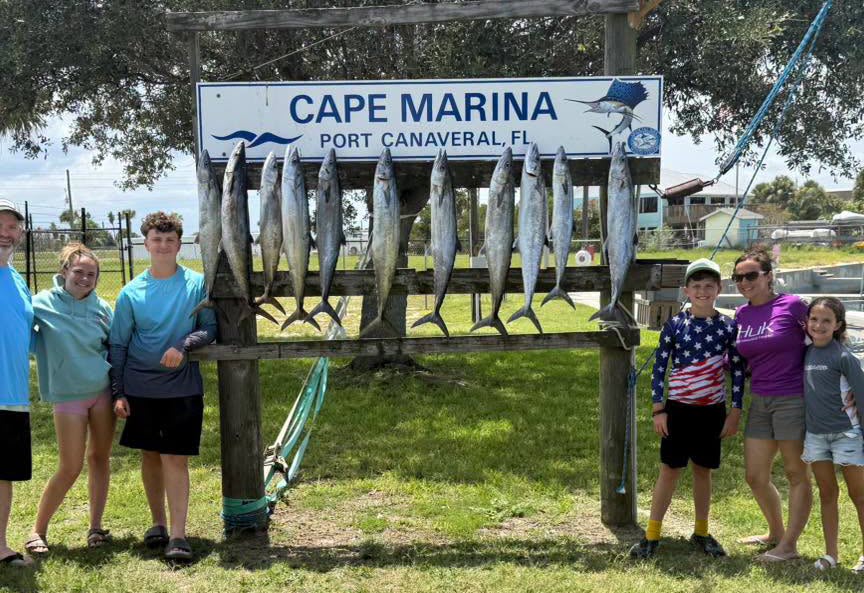
King mackerel are one of the most important September targets out of Port Canaveral. As early fall approaches, kingfish begin feeding around reefs, shoals, live bottom, and the edges of bait schools. This is the start of the period when the southward kingfish run becomes a major part of the Cape Canaveral fishery.
Slow trolling live bait is one of the most reliable ways to target kings. Menhaden, threadfins, blue runners, sardines, and ribbonfish can all produce when presented around active water. Wire leaders and stinger rigs matter because king mackerel have sharp teeth and a gift for turning ordinary monofilament into sad confetti.
Nearshore and shorter-range trips can be excellent when kings are feeding close to the beach or on accessible structure. Longer offshore trips may also encounter kingfish around wrecks, ledges, color changes, or bait-rich reef lines.
For a deeper seasonal look at this fishery, read our guide to the king mackerel southward run off Cape Canaveral. Anglers planning around harvest should also review the current Florida king mackerel regulations before keeping fish.
Nearshore Bait Run Action
September nearshore fishing can become very active when bait pushes along the beaches and around the Port Canaveral area. Mullet schools, menhaden pods, glass minnows, threadfins, and other bait can draw in tarpon, sharks, snook, redfish, jacks, Spanish mackerel, bluefish, barracuda, and king mackerel.
This is where nearshore fishing earns its keep. The run is shorter, lines can go in quickly, and the captain can work around bait movement, water clarity, and building weather without committing the entire group to a long offshore run.
The best nearshore days are visual. Birds diving, bait spraying, fish pushing water, sharks cruising the edges, and Spanish mackerel slashing through bait all help reveal where the action is. The ocean leaves clues. Sometimes subtle. Sometimes very much not subtle, like a jack crevalle behaving like a shopping cart with a jet engine.
Families, first-time anglers, and mixed-experience groups should strongly consider nearshore fishing in September because it offers legitimate action with less travel time. For help comparing trip styles, read nearshore fishing vs. offshore fishing.
Offshore Trolling for Mahi, Tuna, Wahoo, and Sailfish
September offshore fishing still has bluewater potential when the forecast, current, and water color line up. Mahi-mahi may be found around weed lines, floating debris, rips, and color changes. Blackfin tuna can show around bait, birds, and current edges. Wahoo remain a possibility where clean water, speed, depth changes, and temperature breaks come together. Sailfish can also become part of the offshore conversation as the seasonal transition continues.
Offshore trolling is not just running east until someone in the cockpit starts questioning their life choices. The productive plan is to read the water. Weed, birds, bait, current seams, floating debris, color changes, and surface activity all help decide where the spread should go in.
Trolling spreads may include rigged ballyhoo, skirted lures, plugs, feathers, and other presentations based on the target mix. Wire leaders may be needed for toothy fish like wahoo and king mackerel, while lighter fluorocarbon or mono can help with more selective mahi and tuna bites.
For broader seasonal context, compare this September guide with our overview of summer fishing in Port Canaveral and our article on what you can catch offshore in summer out of Cape Canaveral.
Reef, Wreck, and Bottom Fishing
Bottom fishing remains a major September option around reefs, wrecks, ledges, and hard-bottom areas. Depending on depth, current, structure, species, and regulations, anglers may encounter snapper, grouper, amberjack, triggerfish, porgies, grunts, sea bass, sharks, and other structure-oriented fish.
This style of fishing rewards precision. Boat position, current angle, bait size, hook choice, leader strength, and sinker weight all affect the bite. Too little lead and the bait never reaches the zone. Too much lead and the rig starts looking like it was engineered by a dock crane.
Live bait, cut bait, squid, and whole dead bait can all be useful. Some spots fish best on a controlled drift. Others require anchoring, jogging the engines, or repeatedly resetting above the structure. The right move depends on current, depth, sea state, and how the fish are feeding.
Regulations matter here. Atlantic gag grouper harvest is not open in September under current rules, while other grouper species may have different seasons and limits. Red snapper is also highly regulated and should not be treated as a simple year-round harvest target. Review the current Florida grouper regulations, current Florida snapper regulations, and current Atlantic red snapper information before planning around reef fish harvest.
For more local species context, read our guide to the types of snapper you can catch in Port Canaveral.
Shark Fishing in Warm, Bait-Rich Water
September can be an excellent month for shark fishing around Port Canaveral. Warm water, bait schools, reef life, and coastal migration activity all help support shark action close enough to keep the trip efficient. Sharks may feed around nearshore bait pods, channels, coastal structure, reefs, wrecks, and selected offshore zones.
Shark fishing is a strong choice for groups that want heavy tackle, powerful fights, and memorable action without making the whole trip dependent on one specific harvest species. It is physical, exciting, and usually very easy for new anglers to understand once a fish eats. Subtlety leaves the building.
Heavy tackle, strong leaders, circle hooks, large baits, and controlled cockpit work are important. Shark species identification and handling rules are also important because many sharks are protected or have strict harvest requirements. Review the current Florida shark regulations before planning a shark-focused trip.
Should You Book Nearshore, Offshore, Shark, or Bottom Fishing in September?
| Trip Goal | Best Charter Style | Why It Works in September |
|---|---|---|
| Steady action with less travel time | Nearshore fishing charter | Bait movement, reefs, beach zones, sharks, kingfish, Spanish mackerel, tarpon, snook, jacks, and mixed-bag action can all be close enough to fish efficiently. |
| Bluewater trolling and deeper structure | Offshore fishing charter | Calm conditions can open up mahi, tuna, wahoo, sailfish, reef fishing, wreck fishing, and longer-range options. |
| Big pulls and heavy tackle | Shark fishing charter | Warm water and bait-rich conditions make sharks a strong September choice for anglers who want power more than finesse. |
| Reef and wreck variety | Bottom fishing or mixed offshore trip | Structure can hold snapper, grouper species when open and legal, amberjack, triggerfish, grunts, porgies, sea bass, and other bottom fish. |
| Kids, beginners, and mixed-skill groups | Nearshore or family-focused trip | Shorter runs, flexible plans, and active nearshore water often make the day more comfortable and productive for newer anglers. |
Offshore Fishing
An offshore trip is the best fit when the group wants the full deep-sea experience and the forecast allows a longer run. Offshore fishing can target bluewater species such as mahi-mahi, blackfin tuna, wahoo, and sailfish, while also allowing opportunities for reef, wreck, and bottom fishing when conditions call for that plan.
September offshore fishing is especially condition-driven. A clean edge, weed line, rip, or temperature break can make the run worth it. If the offshore signs are weak or the weather window is tight, nearshore or structure fishing may be the smarter choice.
Nearshore Fishing
Nearshore fishing is often the best September choice for families, first-timers, and groups that want action without spending as much time traveling. King mackerel, Spanish mackerel, sharks, tarpon, snook, jacks, barracuda, cobia, and snapper may all be part of the nearshore mix depending on the bait and conditions.
Because September weather can change quickly, nearshore trips also provide valuable flexibility. When the ocean is wearing its spicy pants, shorter-range fishing can keep the day productive without forcing a rough offshore run.
Shark Fishing
A shark trip is the right fit when the group wants heavy tackle and memorable fights. September’s warm water and bait movement can create excellent shark opportunities, especially around bait schools, reefs, channels, and coastal structure.
Shark trips can be especially good for anglers who want the excitement of a big fish without needing a full-day offshore program. Handling and release are part of the experience, so safety and species identification always come first.
Bottom Fishing
Bottom fishing is the right choice when the forecast favors structure and the group wants the possibility of dinner fish, hard pulls, and steady variety. Reefs, wrecks, ledges, and hard bottom can produce snapper, amberjack, triggerfish, grunts, porgies, sea bass, sharks, and grouper species when open and legal.
September bottom fishing should always be planned around current regulations. The captain will help determine what can be harvested legally, what should be released, and when it makes sense to switch from bottom fishing to trolling, shark fishing, or nearshore action.
September Weather and Trip Planning
September is still part of East Central Florida’s rainy season, so morning trips usually make the most sense. The air is cooler, storms are less developed, and sea conditions often give the captain more room to work before afternoon weather becomes a problem.
That does not mean every September afternoon is bad or every morning is perfect. It means the plan should respect the season. Wind direction, swell, storm timing, current, water color, and range all influence whether the best choice is nearshore, offshore, shark fishing, or bottom fishing.
Before a trip, guests can review the National Weather Service overview of East Central Florida rainy-season patterns. The captain will make the final call based on current marine conditions and the safest productive plan for the group.
What to Bring on a September Fishing Charter
- Polarized sunglasses: Helpful for spotting bait, birds, weed lines, water color changes, and surface activity.
- Hat and sun-protective clothing: September sun is still strong, even when fall is technically creeping closer.
- Sunscreen: Apply before the trip and bring extra. Lotion sunscreen is usually cleaner on a boat than spray sunscreen.
- Food and drinks: Bring what your group actually wants to eat and drink during the trip.
- Motion sickness prevention: Take it before departure if anyone is unsure offshore. Waiting until the boat is already moving is how the tiny nausea goblin wins.
- Small dry bag: Useful for phones, wallets, keys, and spare clothing.
- Camera or phone: Keep it protected from salt, spray, and general boat chaos.
We provide the fishing gear, bait, tackle, licenses, ice, fish cleaning services, and an experienced captain. For more trip-planning basics, review our frequently asked questions page. To see the fleet before booking, visit our Port Canaveral fishing boats page, or browse the fishing photo gallery for examples of recent catches.
September Fishing FAQs
Is September a good month to fish Port Canaveral?
Yes. September can be very productive because late-summer and early-fall patterns overlap. Anglers may find king mackerel, Spanish mackerel, sharks, tarpon, snook, redfish, cobia, barracuda, mahi-mahi, blackfin tuna, wahoo, sailfish, snapper, amberjack, and other reef or wreck species depending on the day’s conditions.
What is the best time of day to fish in September?
Morning is usually the best window. Conditions are often cooler, storms are less developed, and fish may feed actively around low light, current, and bait movement. A strong tide or offshore current edge can extend the bite later into the day.
What fish are biting nearshore in September?
Nearshore September trips may encounter king mackerel, Spanish mackerel, sharks, tarpon, snook, redfish, cobia, barracuda, jacks, snapper, and other mixed-bag species. The exact lineup depends on bait movement, water clarity, current, and sea conditions.
What fish are biting offshore in September?
Offshore September trips may target mahi-mahi, blackfin tuna, wahoo, sailfish, king mackerel, snapper, amberjack, grouper species when open and legal, triggerfish, sharks, and other structure-oriented fish. The best offshore plan depends on the forecast, current, water color, and whether trolling or bottom fishing offers the stronger opportunity.
Is September good for king mackerel?
Yes. September is an important transition month for king mackerel around Cape Canaveral. Bait movement and early fall migration patterns can pull kings onto reefs, shoals, live bottom, and nearshore feeding lanes.
Can anglers keep gag grouper in September out of Port Canaveral?
Under current Atlantic rules, gag grouper harvest is open May 1 through August 1, so September is not a gag grouper harvest month. Other grouper species may have different seasons and limits, so check current FWC rules before keeping any grouper.
Can anglers keep red snapper in September?
Do not build a September trip around keeping red snapper unless current rules specifically allow it. Atlantic red snapper harvest is managed through special season rules and reporting requirements, and those rules can change. Always check the current FWC Atlantic red snapper information before planning around red snapper harvest.
Is September shark fishing good?
Yes. Warm water, bait movement, and active nearshore structure can make September a strong shark fishing month around Port Canaveral. Shark trips are a good fit for anglers who want heavy tackle, powerful fights, and a memorable big-fish experience.
Is September fishing suitable for kids and beginners?
Yes. Nearshore and family-focused trips can be tailored to children, beginners, and mixed-experience groups. Shorter runs, flexible targets, and active bait zones often make nearshore fishing the best September fit for newer anglers.
Where do Canaveral Kings fishing trips depart?
Our trips depart from Port Canaveral at 800 Scallop Drive, Port Canaveral, Florida. The location is convenient for visitors staying near Cocoa Beach, Cape Canaveral, Orlando, Kennedy Space Center, and other Space Coast destinations.
Plan a September Fishing Trip With Canaveral Kings
September rewards anglers who stay flexible. A calm, clean-water morning may point toward offshore trolling for mahi, tuna, wahoo, or sailfish. A bait-heavy beach or reef line may make king mackerel, Spanish mackerel, tarpon, sharks, and nearshore action the better choice. A structure-focused day may call for bottom fishing around reefs, wrecks, ledges, and hard bottom.
The smartest plan is the one built around the forecast, the bait, the group, and current harvest rules. For more fall planning context, read our guide to planning a fall fishing charter out of Cape Canaveral.
We run private fishing trips out of Port Canaveral for experienced anglers, families, children, and first-time fishermen. Depending on the boat and trip style, options may include nearshore fishing, offshore fishing, shark fishing, family fun fishing, and extended bottom fishing or trolling trips.
Ready to plan your September fishing trip? Book your Port Canaveral fishing charter online, call 321-543-5109, or contact us with questions about trip length, targets, weather, and availability.