

Last Updated on September 17, 2026 by Eric
October fishing in Port Canaveral brings the fall bait migration, strong king mackerel opportunities, and a changing mix of nearshore and offshore action. Mullet schools moving along the beaches attract predators, reefs hold bait and feeding fish, and favorable offshore conditions can open up trolling opportunities for sailfish, wahoo, mahi-mahi, and blackfin tuna.
At Canaveral Kings, we build our October trips around what the Atlantic is giving us that day. Sometimes the best opportunity is a bait school close to the beach. Other days call for live-bait trolling over a reef, bottom fishing around structure, or a longer run toward productive offshore water. The goal is to match the fishing to the conditions and the people on board.
The transition from September fishing in Port Canaveral into October puts more attention on migrating bait, approaching fronts, and the weather windows between them. Fall can offer excellent fishing, but it rewards a flexible plan rather than a fixed list of fish that must bite.
What Changes Around Port Canaveral in October?
October is a transition month, not an immediate switch to winter. Warm-water opportunities can continue, especially early in the month, while passing fronts begin changing wind direction, water conditions, and bait distribution. Nearshore feeding activity may become concentrated around moving schools, and offshore success depends heavily on locating productive current edges and fish-holding structure.
| October Factor | What It Means for Fishing | How We Approach It |
|---|---|---|
| Fall bait movement | Mullet and other baitfish can concentrate predators along beaches, current lines, and reefs. | Look for active bait, diving birds, surface strikes, and fish showing beneath the schools. |
| King mackerel migration | Fall movement creates opportunities around bait-rich reef edges and coastal feeding areas. | Work suitable live baits or trolling presentations where bait and kings overlap. |
| Passing fronts | Changes in wind and swell can affect access, water clarity, and fishing comfort. | Choose the trip range and fishing method around the marine forecast. |
| Offshore current and water color | Current boundaries, floating cover, and bait concentrations help narrow the search for offshore fish. | Spend time around signs of life rather than covering empty water without a reason. |
| Harvest regulations | Fish that are present are not necessarily open to harvest. | Plan around current Atlantic rules and identify each catch before deciding what can be kept. |
The Fall Mullet Run Creates Nearshore Opportunities
The fall mullet run is one of the defining events of October fishing along Florida’s Atlantic coast. Schools move along the shoreline, bringing food within reach of tarpon, snook, sharks, jack crevalle, and other predators. Smaller baitfish concentrations can also draw Spanish mackerel and bluefish into the nearshore mix.
The amount of visible activity changes from day to day. One stretch of beach may have scattered bait, while another has birds working over tightly packed schools. Locating bait is the beginning of the process; finding bait that predators are actively feeding on is what makes a spot worth fishing.
Our Port Canaveral nearshore fishing charters let us work these coastal opportunities without committing the entire trip to a long offshore run. Depending on the target, that may mean drifting a live bait near a school, casting toward feeding activity, or moving between nearby bait concentrations and structure.
Boat positioning matters. Running through the center of a bait school can scatter it and disrupt the feeding activity. A better approach is to work the outside edge and present a bait where a predator can separate it from the school. Tarpon and snook can be exciting parts of this pattern, but their availability depends on the bait, water conditions, and timing of the run.
October King Mackerel Fishing
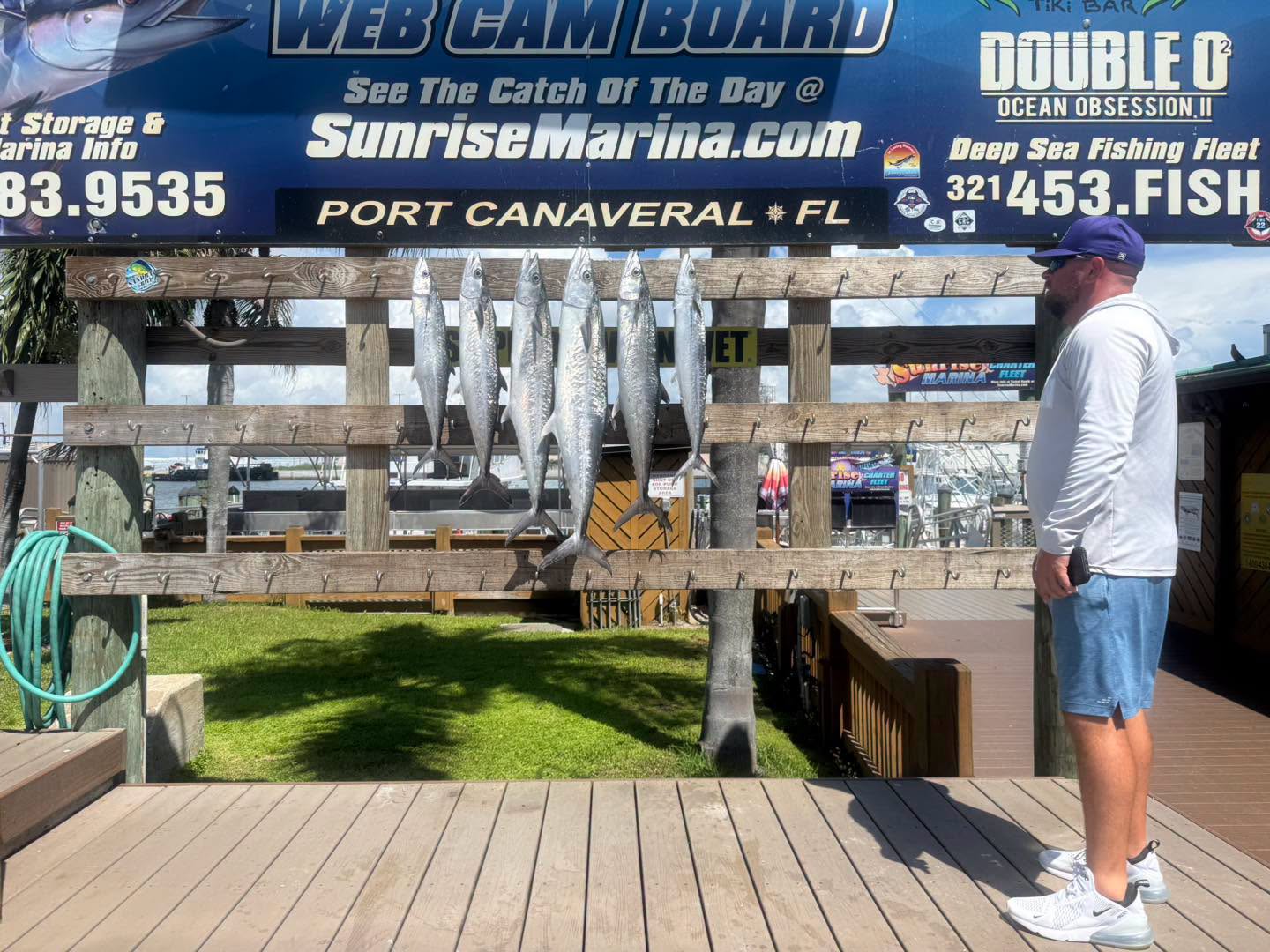
The fall king mackerel run off Cape Canaveral makes kingfish an important October target. Seasonal movement and abundant forage can bring fish onto reef lines, hard bottom, and coastal areas where bait gathers.
Kings are fast-moving predators, so the presence of a reef alone is not enough. A reef holding bait gives us a much better reason to stay. Water clarity, current, and the depth of the bait help determine where to position the boat and how to present the spread.
Slow-trolling live menhaden, threadfins, blue runners, or other suitable baitfish is a standard approach. Rigged dead baits and artificial presentations also have their place. Wire bite protection helps prevent cutoffs, while appropriately adjusted drag allows a hooked king to make its initial run without putting too much pressure on the hooks.
For guests, kingfish offer a different experience from bottom fishing. The strike can come while the bait is swimming behind the boat, followed by a fast run that immediately puts the angler to work. October is a good month to discuss a kingfish-focused trip, with the understanding that the day’s bait and sea conditions determine the best fishing area.
Offshore Trolling for Sailfish, Wahoo, Mahi, and Tuna
When the marine forecast supports a longer run, our offshore fishing charters from Port Canaveral provide access to deeper structure and open-water trolling opportunities. Sailfish, wahoo, mahi-mahi, and blackfin tuna can all be part of the fall offshore picture, but they should be treated as condition-dependent targets rather than a guaranteed October lineup.
Productive offshore water usually gives us something to work with. A current boundary, a defined change in water color, floating debris, or a weed line holding small fish can justify setting out a spread. Birds and surface activity add useful clues, especially when several signs point to the same stretch of water.
Trolling presentations may include rigged ballyhoo, skirted lures, or other offerings suited to the target. The spread and speed should fit the fish we are trying to catch. Wahoo fishing, for example, can call for a different setup from a spread intended to raise sailfish or find mahi.
A longer trip gives us more room to search, but distance by itself does not make the fishing better. When closer reefs are holding bait and feeding fish, spending more time there can be the better use of the day.
Reef, Wreck, and Bottom Fishing in October
Port Canaveral’s offshore reefs, wrecks, ledges, and hard-bottom areas provide another way to build an October trip. Depending on the location, depth, and current regulations, the catch may include mangrove snapper, vermilion snapper, triggerfish, sea bass, amberjack, and other structure-oriented species.
Bottom fishing depends on keeping the bait where fish can reach it. Current strength, sinker weight, bait size, and boat position all affect the presentation. A controlled drift may work over one area, while another calls for holding position or resetting above a smaller piece of structure.
For groups interested in bringing home fish, we discuss legal harvest opportunities before making that the focus of the trip. A productive reef can hold several species with different size limits, bag limits, and seasons.
October 2026 Harvest Rules to Keep in Mind
Atlantic red snapper update: As of September 17, 2026, FWC lists the 2026 Atlantic recreational red snapper state-management season as temporarily postponed. Previously announced October dates should not be treated as confirmed harvest openings. Check the current Atlantic red snapper season information before planning a trip specifically to keep red snapper.
Gag grouper are another important distinction. Under the currently posted Atlantic season, gag grouper harvest is closed in October. Other grouper species have different rules, so a general reference to “grouper season” does not tell the whole story. Review the Atlantic grouper regulations for species-specific requirements.
Port Canaveral is an Atlantic fishery. Gulf Coast season announcements do not establish what can be harvested on our trips. We plan around the rules that apply to the species, location, and date of the charter.
October Shark Fishing
Fall bait movement also creates opportunities for shark fishing around Port Canaveral. Coastal bait schools and productive structure can attract sharks, making a dedicated trip an option for anglers more interested in a powerful fight than a particular dinner fish.
Our Port Canaveral shark fishing trips offer a focused alternative to a mixed-species charter. Shark fishing can involve waiting for a bite, followed by a demanding fight, so it helps to choose this trip because the group wants that experience rather than because it expects constant action.
Appropriate tackle, species identification, and careful handling are essential. Florida requires non-offset, non-stainless-steel circle hooks when targeting sharks with natural bait. Prohibited species must remain in the water with their gills submerged. The current Florida shark regulations and handling guidelines explain these requirements in more detail.
Which October Fishing Charter Fits Your Group?
The choice between nearshore and offshore fishing is not simply a choice between small fish and big fish. Large predators can feed close to the beach, while an offshore trip may combine trolling with a variety of reef fish. Travel time, sea conditions, fishing style, and the group’s experience matter just as much as the target species.
| Your Group’s Priority | Trip to Consider | Main Consideration |
|---|---|---|
| Fall bait-run action with less travel | Nearshore fishing | Best suited to days when coastal bait and feeding fish are accessible. |
| King mackerel and reef-edge fishing | A trip planned around the active kingfish areas | The location of bait and fish determines the necessary range. |
| Open-water trolling and deeper structure | Offshore fishing | Requires a suitable marine forecast and enough trip time for the intended fishing area. |
| A focused big-fish experience | Shark fishing | A good fit for anglers comfortable with heavier tackle and a potentially physical fight. |
| Fishing with children or first-time anglers | A family-focused trip with flexible targets | Choose the duration and fishing style around the group’s comfort and sea conditions. |
Tell us whether your priority is catching a first fish, targeting kings, trying offshore trolling, or fishing with children. That information helps us recommend a trip without assuming every group wants the same experience.
October Weather: Look Beyond the Temperature
A comfortable air temperature does not necessarily mean comfortable ocean conditions. Passing fronts can bring persistent wind, and swell can remain after the local wind eases. October also falls within the Atlantic hurricane season, so tropical weather remains part of trip planning.
Early departures can be useful, but October fishing should not rely on the assumption that every morning will be calm. Wind direction, wave height, wave period, and the forecast trend all matter. Our captains use marine conditions to decide whether a planned trip is practical, not just the sunshine icon on a general weather app.
Nearshore fishing still takes place in Atlantic coastal water. A shorter run does not automatically mean sheltered water or a suitable backup when the ocean is rough. The National Weather Service marine forecast for East Central Florida provides the relevant forecasts, observations, and advisories.
When planning a fall fishing charter, leave some flexibility in your vacation schedule when possible. Booking earlier in your stay may leave room to discuss another date if weather affects the original plan, subject to availability and booking terms.
What to Bring on an October Fishing Trip
We provide bait, tackle, fishing licenses, ice, and fish-cleaning services for legally harvested catches. Guests should bring their food, drinks, and personal items. Our fishing charter FAQs cover additional details about preparing for a trip.
- Sun protection: Bring sunscreen, a hat, polarized sunglasses, and comfortable clothing. Cooler air does not eliminate sun exposure on the water.
- A light outer layer: A wind-resistant jacket or rain shell is useful for a cool departure, passing showers, or spray during the ride.
- Food, drinks, and dry storage: Pack enough refreshments for the trip and protect your phone, keys, and other essentials in a small dry bag.
Let us know about children, first-time anglers, and any comfort or accessibility considerations before the trip. We can discuss the boat, fishing style, and anticipated conditions so your group arrives with realistic expectations.
October Fishing FAQs
Is October a good month to fish Port Canaveral?
Yes. October offers fall king mackerel opportunities, coastal bait-run action, shark fishing, and offshore options when conditions allow. The most important factors are bait location, the marine forecast, and choosing a trip that fits the group.
What fish can you catch nearshore in October?
Depending on the bait and conditions, nearshore trips may encounter king mackerel, Spanish mackerel, jack crevalle, bluefish, sharks, tarpon, or snook. The mix changes, and not every species will be available on every trip.
Is October good for kingfish?
October is an important month in the fall king mackerel pattern off Cape Canaveral. Reefs and coastal feeding areas holding bait are worth attention, particularly when water conditions allow effective live-bait trolling.
Can we go offshore in October?
Yes, when the marine forecast supports the planned run. Offshore trips can include trolling or fishing deeper structure. Fall fronts and swell can affect access, so an offshore reservation should always allow for weather-related decisions.
Is nearshore fishing better for children?
A shorter nearshore trip can be a good fit because it reduces travel time and allows a more focused outing. However, nearshore water is not automatically calm. We consider the children’s ages, the group’s experience, and the sea conditions when discussing the best option.
Where do Canaveral Kings trips depart?
Our fishing trips depart from Cape Marina at 800 Scallop Drive, Port Canaveral, Florida 32920. The location is convenient for anglers staying in Cape Canaveral, Cocoa Beach, and the surrounding Space Coast area, as well as visitors traveling from Orlando.
Plan Your October Fishing Trip With Canaveral Kings
October gives us several ways to put together a rewarding day on the water. A bait-filled shoreline may point toward nearshore fishing, a productive reef may favor king mackerel, and a favorable offshore window may make trolling or deeper bottom fishing the right choice.
We help match those opportunities to your group instead of treating every charter as the same trip. Browse our Port Canaveral fishing reports and seasonal guides for more local fishing information, then talk with us about your dates and priorities.
Plan your October fishing trip with Canaveral Kings. Book your Port Canaveral fishing charter online, call 321-543-5109, or contact our team to discuss trip length, target species, and availability.