

Last Updated on November 10, 2026 by Eric
December fishing in Port Canaveral brings king mackerel around bait-rich reefs, tripletail opportunities on calmer days, and offshore chances at sailfish, wahoo, and blackfin tuna when the Atlantic conditions cooperate. Bottom fishing adds another option, with the day’s targets depending on the structure, current, and species open to harvest.
At Canaveral Kings, we build our Port Canaveral fishing charters around those conditions rather than a fixed list of fish. December can offer productive winter fishing, but choosing the right weather window matters as much as choosing the right bait. A reef trip, a coastal trip, and a longer offshore run can all make sense this month, just not necessarily on the same day.
How December Conditions Shape the Fishing
Cold fronts become an important part of the December fishing pattern along Florida’s Space Coast. Changing wind, cooling water, and shifting bait concentrations influence where fish hold and which areas we can comfortably reach.
A front does not automatically improve the fishing the next morning. Strong north or northeast winds can build rough seas, and the ocean may remain unsettled after the sky clears. Sunny weather at the dock is not the same thing as favorable conditions outside the port.
The better opportunity may come after the wind eases and the seas settle. That can open access to productive reefs, improve visibility for sight-fishing, or make a longer offshore trip practical. The timing varies with each weather system.
We consider wind direction, wind speed, swell, wave period, and the return trip before deciding where to fish. The National Weather Service marine forecasts for East Central Florida provide a more useful planning reference than a general forecast showing only sunshine and temperature.
What Can You Catch in Port Canaveral in December?
King mackerel are a major December target, while other opportunities depend more heavily on water conditions and the type of trip. This is how the main winter options compare.
| Target | Where to Look | December Planning Consideration |
|---|---|---|
| King mackerel | Bait schools around reefs, ledges, and live bottom. | Locate bait and suitable water rather than relying on one reef to produce every day. |
| Tripletail | Buoys, floating objects, and other surface structure. | Calmer water and good visibility make fish easier to spot and approach. |
| Sailfish | Offshore bait concentrations, current edges, and temperature breaks. | A winter opportunity for anglers willing to spend time searching productive water. |
| Wahoo and blackfin tuna | Offshore current boundaries, bait schools, and changes in water conditions. | Possible additions to an offshore trip, not catches to assume before leaving the dock. |
| Snapper and other reef fish | Reefs, wrecks, ledges, and hard bottom. | Species identification, current closures, and safe boat positioning determine the plan. |
King Mackerel Around Pelican Flats and 8A Reef
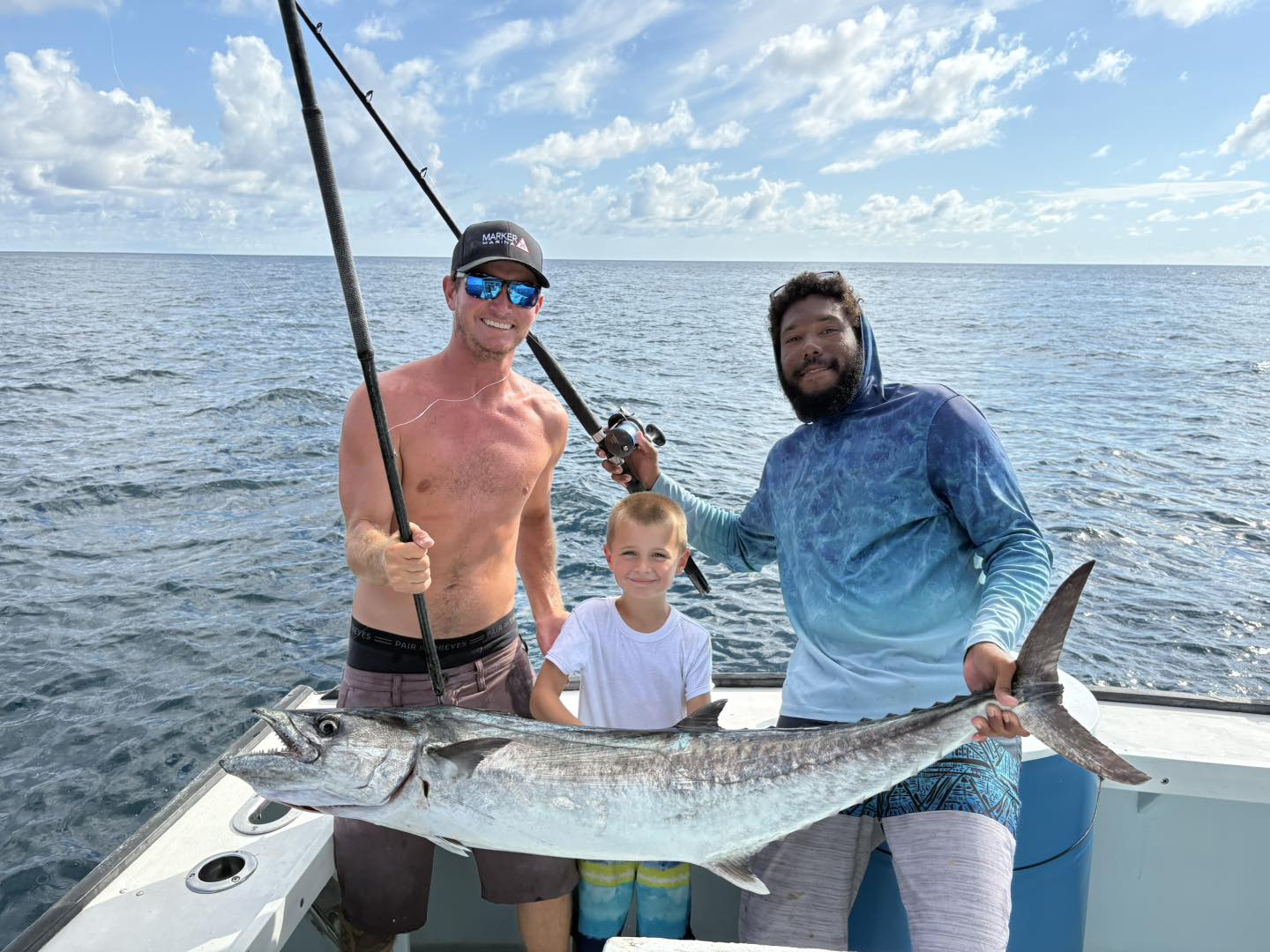
King mackerel, also called kingfish, are an important part of December fishing off Cape Canaveral. The southward king mackerel migration helps explain the seasonal connection between cooling water, traveling bait schools, and feeding fish along Florida’s Atlantic coast.
Pelican Flats and the 8A Reef complex are established parts of the local kingfish fishery. However, the name of the reef matters less than what is happening over it. Bait on the fish finder, feeding activity, current, and water conditions help determine whether an area deserves more time.
Slow-trolling live bait is a useful approach when kings are feeding around structure. Rigged dead baits can also produce. Presentation depth matters because fish may be working beneath the most obvious surface activity.
Kingfish make fast runs and have sharp teeth, so properly rigged leaders and controlled drag settings are essential. Once a fish is hooked, steady pressure and clear direction from the captain help keep the fight manageable.
These reef areas are open Atlantic fishing grounds. They should not be confused with sheltered water simply because they are closer than a distant offshore destination.
Tripletail on Calm, Clear Days
Tripletail offer a different kind of December opportunity. Instead of covering a reef with trolling baits, we look for individual fish holding near buoys, floating debris, and other surface structure.
Visibility is especially important. Sunlight, manageable surface chop, and a careful approach make it easier to identify a fish and present a bait without disturbing it. A live shrimp or small baitfish placed where the current carries it naturally toward the fish can be effective.
The first presentation deserves care. Running too close to the structure or repeatedly casting directly onto the fish can make the opportunity harder. Once hooked, tripletail may head quickly toward nearby cover.
Tripletail are worth watching for during suitable conditions, but they are not a reason to promise a dedicated sight-fishing bite after every cold front.
Sailfish During Offshore Weather Windows
Winter sailfish fishing off Port Canaveral is one of the reasons anglers plan December offshore trips. Finding them involves more than reaching a particular depth. Bait concentrations, current, and changes in water temperature or color help narrow the search.
Trolling natural baits or presenting live bait can create opportunities when fish are feeding in the area. The right approach depends on where the bait is holding and what the conditions allow.
A sailfish-focused trip requires different expectations from an action-oriented reef trip. There may be time spent looking for the right water before a bite develops. For anglers interested in a powerful, acrobatic fish rather than the greatest possible number of hookups, that can be a worthwhile tradeoff.
We approach sailfish as a catch-and-release target, with careful handling and an efficient release taking priority over a lengthy photo session.
Wahoo and Blackfin Tuna Offshore
Wahoo can be part of the December offshore picture, particularly when bait and favorable water come together along current boundaries or temperature breaks. Their speed and sharp teeth call for tackle and presentations suited to the target.
Wahoo tactics are not interchangeable with a slow-trolled kingfish spread or a sailfish presentation. Lure choice, bait depth, leader material, and trolling speed all affect how the spread fishes.
Blackfin tuna may also appear around offshore feeding activity. Birds, bait near the surface, and fish showing on the electronics can provide useful clues, but neither tuna nor wahoo should be treated as a guaranteed addition to a December charter.
Bottom Fishing for Snapper and Other Reef Species
Reefs, wrecks, and hard bottom provide another way to fish in December. Depending on the location and current regulations, the catch may include mangrove snapper, lane snapper, gray triggerfish, and other reef species.
Current and boat positioning are important. Baits need to reach the productive part of the structure without immediately sweeping away or hanging in the bottom. Matching the rig and sinker to the conditions helps keep the presentation where fish can find it.
Switching from trolling to bottom fishing can be a useful tactical adjustment, but it does not make rough seas safe. We still need conditions that allow a comfortable run and controlled fishing over the structure.
Release preparation also matters. Fish brought up from depth can experience pressure-related injuries, known as barotrauma. A descending device helps return affected fish to depth, and having one readily available is required when fishing for or possessing snapper-grouper species in South Atlantic federal waters. The South Atlantic Fishery Management Council’s fishing and release guidance explains the required equipment and recommended practices.
Choosing the Right December Fishing Charter
Nearshore Trips for a Coastal Fishing Experience
Our nearshore fishing charters are worth considering for families, first-time anglers, and groups that prefer to stay closer to the coast. These private trips accommodate up to four anglers, with the fishing approach adjusted to the season and conditions.
Nearshore does not mean guaranteed calm water. Wind and swell can affect the beaches and coastal fishing grounds, so we still evaluate the forecast carefully. Let us know about children, first-time boaters, or anyone concerned about a longer ocean trip when booking.
Offshore Trips for Reefs, Wrecks, and Trolling
Our offshore fishing charters from Port Canaveral accommodate up to six anglers and offer options for reef fishing, wreck fishing, bottom fishing, and trolling.
For anglers interested in sailfish, wahoo, or a broader offshore search, additional time gives us more room to work different areas. It does not eliminate the need for a suitable forecast or guarantee a particular species.
Tell us whether your priority is a specific fish, a family outing, or the opportunity to bring home a legal catch. That helps us recommend a trip that fits your group rather than simply choosing the longest outing available.
December Fishing Regulations to Know
Port Canaveral is on Florida’s Atlantic coast. Gulf fishing seasons and bag limits should not be applied here, and state and federal requirements can differ. The species, fishing location, and vessel’s permits all matter.
Under the current Florida Atlantic king mackerel regulations, the minimum size is 24 inches fork length and the daily recreational limit is two fish per harvester. King mackerel are open year-round in Atlantic state waters.
The current Florida tripletail regulations allow two fish per person with an 18-inch minimum total length. Additional gear restrictions apply, including restrictions on multiple hooks used with natural bait.
Snapper regulations vary by species, and grouper or other reef-fish harvest opportunities may be affected by seasonal or quota-based closures. We identify each fish and confirm the applicable rules before deciding what can be kept.
December 2026 Red Snapper: Do Not Assume an Open Season
As of November 10, 2026, FWC lists Atlantic recreational red snapper harvest as closed, and its published state-management schedule does not list an approved December opening.
NOAA Fisheries has announced that a possible additional December 2026 season depends on a review of October harvest data and coordination with the participating states. That possibility is not an authorization to keep red snapper.
Before planning a harvest-focused trip, check the current Florida Atlantic red snapper season information and the NOAA announcement explaining the potential December season. Any opening must be officially authorized, and all applicable participation requirements must be met.
Until an applicable opening is confirmed, plan to release red snapper rather than building the trip around keeping them.
What to Bring on a December Charter
A December morning can feel considerably cooler once the boat is moving, even when the afternoon forecast looks mild. Dress for wind and spray as well as the air temperature.
- Comfortable layers: Bring a warmer layer and a wind-resistant or waterproof jacket that can be removed as conditions change.
- Secure footwear and sun protection: Wear comfortable shoes with good traction, and bring sunglasses, a hat, and sunscreen.
- Food, drinks, and personal essentials: Pack what your group needs for the trip, including any necessary personal medication.
- Protection for electronics: Keep phones and cameras in a water-resistant bag or case when they are not being used.
We provide bait, tackle, fishing licenses, ice, and fish-cleaning services for legal catches. Our charter frequently asked questions cover additional preparation details, including bringing children and arranging a customized trip.
December Fishing FAQs
Is December a good month to fish Port Canaveral?
Yes. December offers opportunities for king mackerel, offshore sailfish, and a variety of reef fish, with tripletail, wahoo, and blackfin tuna possible when conditions line up. Weather flexibility is important because winter fronts can interrupt access to otherwise productive water.
Is the day after a cold front always the best day to fish?
No. A front can change bait movement and feeding activity, but strong winds and rough seas may remain after it passes. The better choice may be a later day when conditions have settled. We use the marine forecast rather than a fixed post-front rule.
Do December fishing trips need to leave at sunrise?
Not always. An early start can be useful for covering water, but the best departure depends on the trip, weather, daylight, and target species. Sight-fishing for tripletail, for example, benefits from enough light to see fish around surface structure.
Can families and beginners fish in December?
Yes. We welcome beginners and families, with the trip recommendation based on the group and expected sea conditions. Tell us the ages of any children and your boating experience so we can discuss an appropriate option.
Where do Canaveral Kings charters depart?
Our trips depart from Cape Marina at 800 Scallop Drive in Port Canaveral. Confirm your arrival time and trip details with us before heading to the dock.
Plan Your December Fishing Trip With Canaveral Kings
Successful December fishing starts with matching the trip to the conditions. Some days favor kingfish around bait-rich reefs. Others offer a chance to search offshore for sailfish or wahoo, work bottom structure, or look for tripletail when visibility improves.
That flexibility is central to winter fishing in Port Canaveral. Bring your priorities, and we will help you choose a realistic plan for your group and the season.
Plan your December trip with us. Book your fishing charter online, call 321-543-5109, or contact Canaveral Kings to discuss trip options, target species, and availability.